Friday, September 27, 2019

Ecosystems

Ecosystems

"...in the 1960s DDT caused populations of brown pelicans to go extinct in California, Louisiana, and several other regions of the US. After DDT was banned in the 1970s, individuals from surviving populations within the metapopulation began to recolonize the affected regions. Today the brown pelican is no longer listed as endangered."


I've always been a fan of pelicans since I grew up watching them on the beaches of South Florida. I really admire the way they glide just inches above the water when looking for fish, and the pouches in their bills are quite fascinating. I'm really glad DDT was banned in time for them to make a recovery, as beaches really just wouldn't be the same without them. I also never recognized that a species can become locally extinct, which makes sense since it's rare for every member of a species to be gathered in one area. I guess polar species are the only examples I could think of as examples. The word 'metapopulation' was also in bold as a vocabulary word, and it refers to a collection of local populations all working together so that they can't be wiped out in one fell swoop.
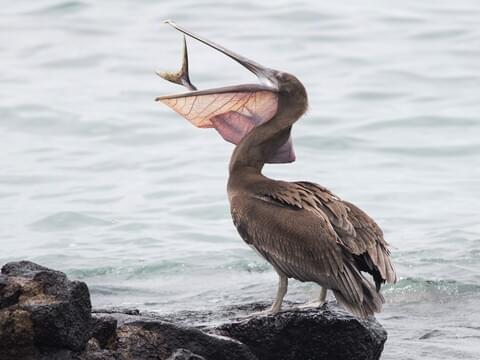

Image result for brown pelican
https://www.allaboutbirds.org/guide/Brown_Pelican/id


"Invasives are more efficient than the natives at exploiting nutrients and other resources, and without natural controls they can take over a habitat, driving some of the natives to extinction."
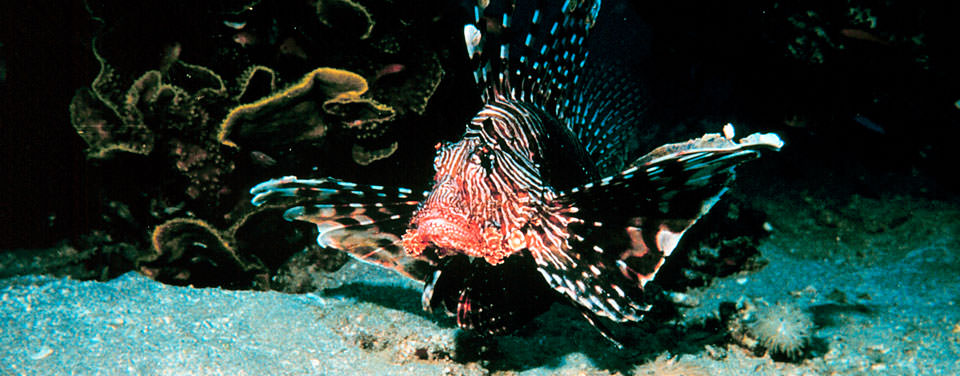
Over time I think I've started to equate invasive species to exotic ones in that they're just not from around the area, so reading this reminded me about the difference between them. The first animal I think of when I hear invasive is the lionfish given all the media attention it's been given in my area growing up. I never knew what exactly it was they were doing that was wrong so I looked it up. Apparently, they have very few natural predators in the Atlantic Ocean, and since they're carnivores, they've been devastating the important snapper and grouper populations ("Why are lionfish a threat to Atlantic Ocean fish?" 2019). I also never thought about how a marine invasive species is much harder to deal with than one on land, but it makes sense since we can't breathe underwater. Experts are currently at a loss for how to deal with lionfish so it seems humans will be filling in the predator role in the meantime.

Invasive species are capable of causing extinctions of native plants and animals, reducing biodiversity, competing with native organisms for limited resources, and altering habitats
https://oceanservice.noaa.gov/facts/lionfish.html

"However, “no net loss” is an improvement over earlier practices that failed to address ecosystem loss (Perlman and Milder 2004, 207). Mitigation does create a financial incentive to developers for restoring or enhancing wetlands, and the practice of mitigation banking does consolidate many small projects into larger, potentially more ecologically valuable sites."

I felt like this quote applied to me and what I want as a career in the future. While I don't plan on becoming a contractor and creating new developments, I will be getting into real estate investing which I believe will provide me with many chances to contribute to conservation efforts to offset development. I love wildlife of all kinds so I can say without a doubt that I will be navigating my future job with species conservation as a high priority. While the system in the quote isn't perfect, it's many times better than not trying to mitigate losses at all, which is what we used to do.

Sources:


  1. US Department of Commerce, & National Oceanic and Atmospheric Administration. (2013, June 1). Why are lionfish a threat to Atlantic Ocean fish? Retrieved from https://oceanservice.noaa.gov/facts/lionfish.html.
  2. Robertson, M. (2017). Sustainability Principles and Practice. Abingdon, Oxon: Routledge.


Friday, September 13, 2019

Water

Water

Every object we use required water for its manufacture. For example, the virtual water content of a new pair of jeans is about 3,000 gallons and the virtual water content of a new car is about 39,000 gallons.

I honestly can't say that I've ever stopped to think about how much water of all things it took to create a product. I guess I only ever considered the components that stayed in the final product. It'd be rather strange to be walking around in jeans with 3,000 gallons of water attached to them after all. Even when I'm just cooking dinner, it feels like I'm constantly having to turn on the sink for some reason or other. It helps to put the water problem into perspective in this way because it makes it relatable, which makes it easier for people to understand the problem and want to do something about it to help.


A common type of cooling system is called a cooling tower, used in most large buildings. Water flows through a building space or piece of equipment, picks up heat, and flows through the cooling tower, where evaporation lowers the temperature of the water. The water is then recirculated.

When I was working for my dad as an assistant building inspector, I saw these kinds of cooling towers all the time on the roofs of large industrial buildings. The sheer size of the things really made me think about how much technology has advanced since the Industrial Revolution. Even just imagining life without a refrigerator makes me uncomfortable. I remember visiting Spain when I was younger, where we stayed in a small, relatively undeveloped village in which A/C was a luxury. All they could do was put small fans everywhere, and it really made me appreciate what I have back here in the United States. I also have some experience with purifying water while camping on the trail. Water really tastes the best when you simply take it from a stream or lake, boil it, and then let it cool.

Image result for minnesota northern lakes
https://www.vacationsmadeeasy.com/TheBLT/21AwesomeMinnesotaLakesthatAllFishermenShouldKnowAbout.html

Strategies for treating and infiltrating stormwater all use permeable surfaces and include rain garden depressions and vegetated swales that replace concrete channels or pipes, porous paving that lets water infiltrate the soil instead of running off, and green roofs that soak up water instead of shunting it away.

This quote really got me interested in having a house that maximizes the potential of rainwater. I'd love to have a house in the future with a cistern from which I can draw fresh rainwater instead of having a fridge with a water dispenser on it. Not only would it be a good topic for conversation, but I'd also be helping out the environment at the same time. I'd love it if I was able to convince my friends to to do the same with their homes when the time comes. I like to think I've always been a real outdoors type, all things natural just taste a whole lot better to me. I've lived my whole life in Florida, so I'm no stranger to rain. All the strategies in the quote seem like great ideas to me and I'm looking forward to putting them into practice in my own home in the future.


Sources:
  1. Robertson, M. (2017). Sustainability principles and practice. London: Routledge, Taylor & Francis Group.

Sunday, September 8, 2019

A Land Ethic

A Land Ethic

This first quote resonated deeply within me and made me consider how I'd been raised and the thoughts and feelings I now have in my head.

When learners are confronted only by the dangers of Earth’s dire situation, the result can be feelings of despair and hopelessness, leading to the very opposite of the response that is needed. Students need facts, but then they need to know that they can make a difference.

Looking back on life, it feels like the only sustainable habit I developed was putting recyclables into the recycling bin. I grew a bean sprout in a little clay pot at school once, but there really wasn't much of a focus on sustainability or the environment at all there. It wasn't any better at home either since my dad was working long days in construction at the time and my mother was working a nine to five only to come home and start cooking, cleaning, and making sure my brothers and I were doing our homework. I was also a straight A student growing up which meant I was sitting at the table most of the day to make sure I would keep getting those grades. Really the only time I enjoyed thoroughly interacting with nature was when I'd go out with my friends and go adventuring through our neighborhood. Joining the Boy Scouts really helped me to reconnect with my love for nature, and I've loved hiking through forests and mountains ever since. I just wish I could've started on it earlier than I did.

I found the following quote to be quite interesting when I compared it to the playgrounds I remember growing up with.

Sørensen provided an enclosed space originally known as a “junk playground,” supplied with scrap materials and simple hand tools where children could work with earth, water, even fire, interact with farmyard animals, and build their own communities, overseen by skilled playworkers who provided materials and managed risk.

I still remember my old playground in Pre-K and how it was nothing like the kind of playground described in the quote. Mine was fenced in, consisted of concrete and mulch, had the typical steel castle centerpiece, some individual seesaws, and a couple of old swing sets. On the concrete, there was a structure resembling a basketball hoop except it had four tunnels facing opposite directions through which the ball would be fed back to us. Back then I couldn't throw the ball hard enough to reach the basket at the top, which eventually led to my peers taking the ball from me in favor of someone that could actually reach. I also remember how I got quickly bored of the rest of the playground and eventually started spending most of my time on a swing. It really makes me wonder if I'd have more of an appreciation for the environment or less of a negative outlook on it if my playground environment had been a bit more diverse.

This last quote just amused me a bit, but I must admit it does make sense.

Kuan-Tzu, a collection of Chinese philosophical writings from the third century BCE, said: “If you are thinking a year ahead, sow seed. If you are thinking ten years ahead, plant a tree. If you are thinking a hundred years ahead, educate the people.”

I've always enjoyed the simple approach of Oriental philosophic writing. It seems like they're always taking a simple situation, expanding it a little, and then connecting it to a much larger idea. I feel like it is a very effective method of teaching and should be utilized more in in the West.
Image result for Kuan-Tzu
http://suprememastertv.com/cs1/v/63086370366.html


Sources:

  1. Robertson, M. (2017). Sustainability principles and practice. London: Routledge, Taylor & Francis Group.