Tuesday, December 3, 2019

Working for an Organization

Working for an Organization

"Corporate social responsibility (CSR) is a voluntary commitment by companies and other organizations to take responsibility and be held accountable for their environmental and social impacts. Such organizations go beyond legal requirements and fiduciary responsibilities to acknowledge a moral responsibility toward the environment and society of which they are a part, taking responsibility for their negative social and ecological impacts, striving to increase their positive impacts, and being accountable for both."

In my opinion, corporate social responsibility is a great thing for a company to have, as it shows to the people that they aren't like the greedy corporations protested against on Wall Street and are actually making an effort to give back to the community. The Hiring Success Journal lists the top companies for corporate social responsibility, with Ben & Jerry's, Bosch, Starbucks, IKEA, and Salesforce in the top five respectively. Ben & Jerry's alone donates more than $1.8 million per year to philanthropy and sustainability efforts, and it's actions like these that increase awareness for sustainability efforts and encourages us to work together for a better future.

Image result for ben & Jerrys sustainability
https://sites.google.com/site/meaganehoffs/home/mock-advertising-and-creative-campaigns/ben-jerry-s-circle-of-sustainability-campaign

"
Transformation toward sustainability requires good governance and strong leadership. Eventually, involvement and support from senior management will be required; transforming the organizational culture and successful long-term maintenance of sustainability initiatives are nearly impossible without support from the power brokers in the organization (Doppelt 2003b, 5). Progress toward change typically occurs faster when initiatives are sponsored by or at least supported by senior leaders."

Leaders push others to be better than they are and practice what they preach. Leaders are found even in animals, who rely on those leaders to guide and keep them safe. Without them, our society would cease to progress. This is why companies stagnated or failed when factors such as nepotism decided who would lead. A good leader would recognize the need for sustainability in our work environment today and push to achieve a greater environmentally-friendly presence on the planet. This is the kind of leader I hope to be one day in the real estate business, doing things such as selling properties exclusively to sustainably minded companies and people that want to live in self sufficient homes.

Image result for self sufficient home
https://inhabitat.com/tag/self-sufficient-home/


Sources:

Robertson, Margaret. Sustainability Principles and Practice. Routledge, 2017.

Vilas, Nupur. “Top 20 Socially Responsible Companies 2017: SmartRecruiters.” SmartRecruiters Blog, 22 Aug. 2018, https://www.smartrecruiters.com/blog/top-20-corporate-social-responsibility-initiatives-for-2017/.

Friday, November 1, 2019

Waste

Waste

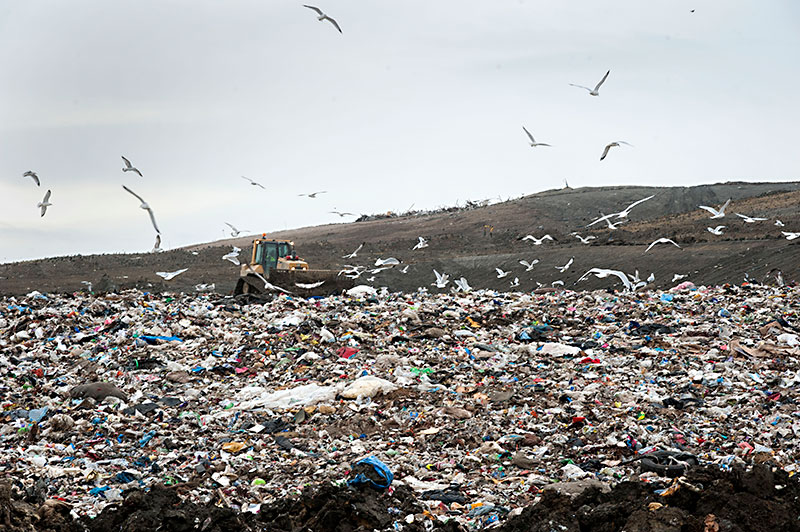
"Every day the average person living in the US throws away 4.6 pounds of solid waste (Center for Sustainable Systems Factsheets 2008, 1), and for every pound of household waste we discard, 40 to 70 additional pounds of industrial debris were generated during its production (Rogers 2005, 4). But as one of Barry Commoner’s “four laws of ecology” makes clear: “Everything must go somewhere. There is no ‘waste’ in nature and there is no ‘away’ to which things can be thrown” (Commoner 1971)."

The problem of waste in today's society has truly become a problem bigger than any single person can understand at this point without getting a good lake at our waste management system. Since not many people have the time or the will to go out of their way to do this, the waste problem continues to escalate and cause even more harm to our planet. I believe one of the biggest contributors to this problem is the way we package things and the rules we have in place associated with it. I'm of the general opinion that lawyers can manage to ruin anything, and they've certainly done so with packaging. Lawsuits have led to the requirement of more packaging for the safety of the minority consumer that doesn't understand how to handle products safely, which in turn has created more waste that ends up being discarded in landfills. Landfills aren't even a good option for waste management as the quote describes, because landfills were areas that were originally vital parts of diverse ecosystems that was then designated as a waste site by humans.

Image result for landfill
https://www.austinchronicle.com/news/2019-01-18/austins-least-loved-landfill-may-be-poised-to-grow-again/

"Incineration produces ash in two locations: Bottom ash collects at the bottom of the combustion chamber; lighter-weight and more-toxic fly ash forms in flue gases in the stack. When scrubbers and filters are added to stacks to remove pollutants such as dioxins from flue gases, the pollutants do not disappear but are transferred from the exhaust gas to the fly ash as it collects in the filter media (ibid.). The contaminated ash is sent to a landfill, where dioxin and other toxins can become mobile in leachate and enter soil and groundwater (Rogers 2005, 5; Leonard 2010a, 214)."

I liked this quote because it reminds me just how far we've advanced in scientific knowledge, and it made me imagine how the early pioneers of these waste management systems must have felt creating what they thought to be an ingenious solution to a problem they had the foresight to recognize. Before science, people usually believed that if you could no longer see it, then it wasn't there anymore. We now know better and recognize the threat of microscopic toxins that are poisoning our environment, allowing us to act and conduct ourselves in a more responsible manner. One way we could combat the problem posed in the quote could be by using more sustainable resources in things such as packaging that don't release pollutants such as dioxins.

Image result for wte plants
https://www.ecomaine.org/our-facility/waste-to-energy-plant/

"In the waste hierarchy known as the 3Rs, the priorities for dealing with waste are to reduce, then reuse, and finally recycle as the last line of defense. Some sustainability specialists recommend adding a fourth, higher priority, 're-think,' to the beginning of the hierarchy: re-think, reuse, reduce, recycle. They point out that we may be asking the wrong questions. Maybe the question should not be, 'how can we recycle more?' Maybe the right question is, 'how can we stop producing so much waste in the first place?'"

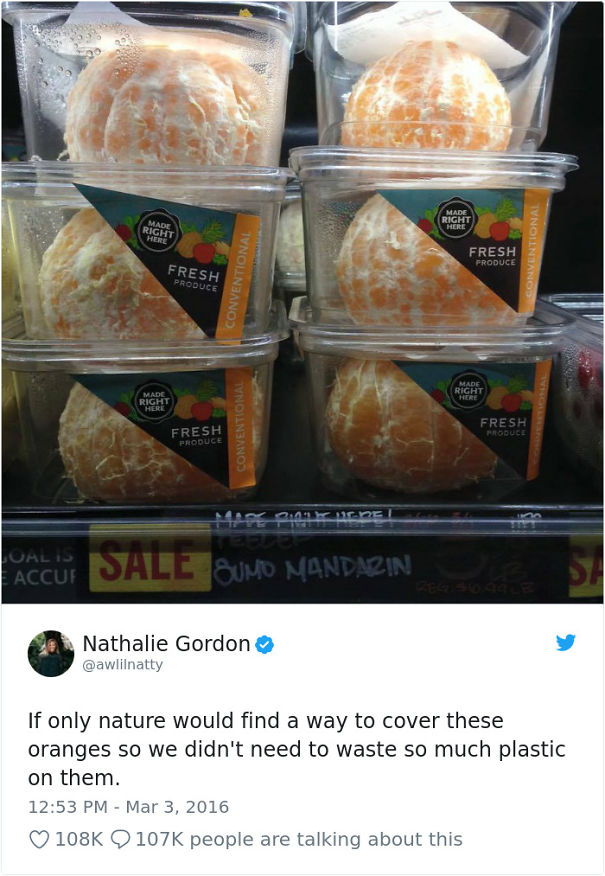
It looks like I already understand the concept of 're-think' pretty well given the example I gave in the first section of this blog. Using less packaging on products would drastically decrease the amount of waste created and would make it much easier to recycle the necessary waste conducive to every day life. I believe many people today have become too soft given the abundance of regulations that cater to the inept and indifferent. In my perfect world, these people would unfortunately fall victim to the natural selection process, allowing for the others to successfully manage their waste in a safe, competent, and environmentally-friendly manner, which would do wonders for the health of our planet.

If Only Nature Would Find A Way To Cover These Oranges So We Didn't Need To Waste So Much Plastic On Them
https://www.boredpanda.com/unnecessary-wasteful-packaging/?utm_source=google&utm_medium=organic&utm_campaign=organic

Sources:


Robertson, Margaret. Sustainability Principles and Practice. Routledge, 2017.

Friday, October 25, 2019

Energy


Energy

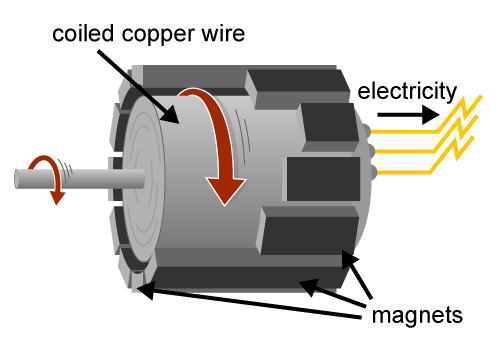
"Power plants use mechanical energy to turn generators. A generator is a device that converts mechanical energy into electrical energy. Mechanical input for generating electricity can come from a wind turbine, a turbine in a hydroelectric dam, ocean wave action, diesel engines, or a steam turbine. . . When a coil of wire in a generator rotates inside a strong magnetic field, the motion induces electrical current to flow in the coil."

I think this quote did a good job of explaining how generators create electricity, as it was a concept I had previously struggled with or maybe didn't care to really remember the first time it was explained to me. I've noticed that a lot of people today are content with not knowing how things work as long as they actually work. I believe this can be attributed to the rise of the era of specialization in the workplace and the need for people to be able to do one thing very well while sacrificing passable knowledge in other subject areas. Inventions have also become more and more complex as time has passed, and it has become harder in general to just understand how a complex piece of machinery such as a printer or a car works unless you work with them directly. 


Image result for how a generator works
https://www.eia.gov/energyexplained/electricity/how-electricity-is-generated.php

"Generating electricity from sunlight is not free. Although costs are coming down, the initial costs of installing a PV system remain high. Government subsidies will be essential until the solar industry comes up to scale. In Germany, government policy which guaranteed a long-term premium price and access to the grid led to rapid growth of solar power in that country (Brown 2015, 68)."

Maybe I'm biased, but as a strong capitalist and libertarian, seeing government subsidies being described as essential just makes me fume. To me, it seems like Margaret Robertson believes you can solve any problem just by throwing more money at it. Even worse, taxpayer money that comes from those that may not even agree with the plans for its use. Solar power is still nowhere near becoming a reliable source of energy, so it'd be hard to sell an expensive push in solar research to the average taxpayer. Sure, our current sources of energy are becoming increasingly less stable as time goes on, but that doesn't give anyone the right to steamroll over others in order to get what they believe is most important. Furthermore, the source Robertson uses isn't even entirely accurate. Yes, the presence of solar power in Germany has increased, but the way she frames it makes it seem like the government subsidies were successful and had no negative impact on the country. In reference to Germany's solar subsidies, Ball says, "But all that ambition is bleeding Germany. The mounting costs are testing its resolve. Leading politicians, even those with strong environmental credibility, are racing to rein in spending. If they can’t achieve that, then Germany’s near miracle may be remembered as the environmental equivalent of, say, heart-transplant surgery: a worthy endeavor, undoubtedly, but one that remains unattainable for all but the very wealthiest" (Ball) Even worse, he also quotes an actual German citizen that takes advantage of the subsidy who says, "If a business owner ran a company the way the German government has structured its solar subsidies, he would be bankrupt" (Ball).


Image result for germany solar subsidies bad
https://www.forbes.com/sites/michaelshellenberger/2019/02/05/if-saving-the-climate-requires-making-energy-so-expensive-why-is-french-electricity-so-cheap/#3e6a43a1bd98

"So-called “traditional biomass” is wood, charcoal, agricultural residues, and animal dung burned for cooking and heating in developing countries. This material often comes from unsustainable harvesting and results in unhealthy air pollution, greenhouse gas emissions (IPCC 2014c, 48), and climate impacts from black carbon (OECD 2012, 135)."

I shouldn't have been eating while reading this quote, I almost couldn't finish my sandwich. It's hard to imagine someone that can stand the smell of burning animal dung and still be able to eat whatever they cooked afterwards. This is a great opportunity for us to band together and work towards a solution that doesn't require the help of the government and that we can feel personally proud of.


Sources:

Robertson, Margaret. Sustainability Principles and Practice. Routledge, 2017.

Ball, Jeffrey. “Germany's High-Priced Renewable Energy Revolution.” Fortune, Fortune, 14 Mar. 2017, https://fortune.com/2017/03/14/germany-renewable-clean-energy-solar/.

Friday, October 18, 2019

Livable Cities

Livable Cities

"New developments are almost always based on the assumption that people travel in automobiles every time they move from one place to another. Buildings are set back from roads, fronted by driveways or surrounding by parking."

While I do believe there is some truth to the problem of urban sprawl, I don't agree with the sentiment in this quote that personal cars are an evil that needs to be severely reduced or eradicated. Cars have become both a symbol of our freedom as individual Americans as well as a personal method of expression and personality. Having a personal vehicle means you can go wherever you want whenever you want without having to submit to the predetermined routes of public transportation. You don't need to be on time and you can make as many stops along the way as you want. This level of freedom is something that I believe is vital to the sense of liberty and freedom that Americans have. Cars are also a source of passion for a lot of people such as car collectors and mechanics. It is also true that you can tell a lot about a person by what kind of car they drive, so eliminating this factor would also eliminate a reliable way of understanding someone.

https://goflatoutph.com/2018/06/01/find-out-what-your-favorite-car-color-says-about-you/

"Greater density can support public transportation, with less driving, more walkable neighborhoods, and more affordable infrastructure services; it also supports greater numbers of neighborhood stores and markets. The denser a city, the less its inhabitants drive and the more they walk and use bicycles and public transit; efficiencies are built in."

This is another statement that, while it does have some truth to it, I can't agree with completely. For many people, really dense cities and mixing housing with business can be a tremendous source of stress. There is a part in every human that needs the open air and vast expanses of land to enjoy. There are also many people working jobs they'd rather not be doing and feel the need to live as far as possible from their place of work. The fast-paced energy and unforgiving nature of a dense city just isn't for everyone. If people live in cities that discourages vehicle ownership, it also makes it harder for people to enjoy trips to the great outdoors as they have to go out of their way to secure a method to get there. Stress is such a problem in big cities due to bright lights, never ending noise, and a feeling of disconnection and unimportance that it regularly leads to depression and even suicide.


"Many of the approaches taken by cities to develop compact, mixed-use neighborhoods, reduce vehicle miles traveled, promote high-performance buildings, increase the use of locally produced materials and products, increase renewable energy, restore functioning ecosystems, protect water resources, and provide food from urban agriculture are strategies that are relevant to adapting to climate change."

At the risk of sounding like a broken record, I really don't think mixing business and where people live is a good idea. People not liking their jobs isn't even the only reason people don't want to live close to their place of work. One thing common in families is the desire to separate their work life from their family life because they don't want the stress from work to come in to their home with them and affect their relationship with their family. This would be difficult to accomplish if you only lived a couple blocks away because you don't have enough time to make that mental shift that you have arrived at your home. However, I fully agree with the other methods proposed in the quote and would love to see those put into practice.

Sources:

  1. Robertson, Margaret. Sustainability Principles and Practice. Routledge, 2017.


Friday, October 11, 2019

Sustainable Food


Sustainable Food

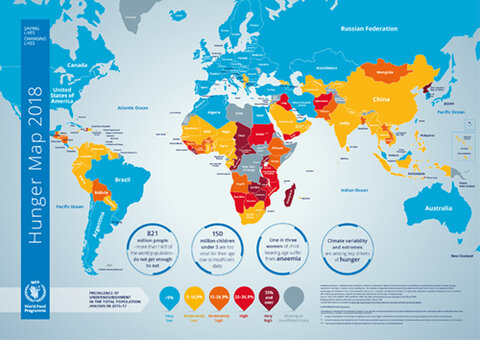
"Since the green revolution, food production in developing countries has increased, doubling or tripling in many places. However, because population has also nearly doubled, the amount of food produced per person has remained nearly unchanged in most parts of the world. At the same time, the green revolution has resulted in damage to soils, waters, and ecosystems, the final costs of which are not yet known."

Before reading this quote, I didn't fully understand the dilemma between increased food production and the increasing human population. The problem with world hunger is such that if we try to increase food production to resolve it, the world population increases because times are good, and it is easier to raise children with the surplus of food. Of course, then the increasing population begins to outpace food production and we are back to where we started. If we are going to solve world hunger, it is obviously going to take a more creative solution than just making more food. It is also a bad solution because our new and more effective methods of growing food are actually hurting the Earth and are not viable in the long run. We need new scientific breakthroughs in agriculture that avoid negatively impacting the environment.


Image result for world hunger
https://www.wfp.org/publications/2018-hunger-map

"
Farmed fish are selectively bred for growth qualities and often genetically modified. When they escape from ponds and coastal pens into wild ecosystems, they grow larger and faster than native fish, whom they outcompete, while at the same time spreading disease and affecting the genetic pool by interbreeding."
I've been to a fish farm before in Minnesota that dealt mainly with salmon and the experience was both revealing and surprising. The tour they gave me of the facility didn't really give me the impression that it was too small for the fish, but then again, I wouldn't know how much space salmon really need. I was with my family and they gave us one of their salmon filets to take home. It was delicious, and as an experiment we went out and bought a wild-caught salmon to compare. It was amazing how different the taste was between the two, and it made me realize that we are getting accustomed to these genetic modifications in our food. The wild-caught salmon had much tougher flesh, less fat, and was also a darker color. This observation really made me think about what the future holds and whether this will be a positive or negative thing for both humans and the environment.


Image result for salmon farm
https://www.nanaimobulletin.com/news/john-horgan-wades-back-into-salmon-farms/

"
About 70 percent of water use world-wide goes to the production of food (Sachs 2009, 36). Large-scale irrigation depletes underground aquifers such as the ancient Ogallala, while heavy use of irrigation water to grow crops on land that would not normally support them overtaxes some surface waters, such as the Colorado River in the US."

This statistic shocked me because it reminded me about how it takes 3,000 gallons of water just to make a pair of jeans. It really puts into perspective just how much water is used to make the things we use and eat every day. I've also never seen an aquifer before, and this quote makes me imagine a huge space underneath the Earth that spans across multiple states and would make a deep sea diver shake in his fins in order for it to be big enough to be able to supply us with that much water. We also need to figure out what we are going to do when these resources are finally depleted, and it should be sooner rather than later.

Sources:


  1. Robertson, Margaret. Sustainability Principles and Practice. Routledge, 2017.

Friday, October 4, 2019

Pollution

Pollution


"Many substances are toxic at certain quantities but have negligible effects below certain concentrations. Nitrogen, for example, is necessary to plant growth, but added in excess amounts as fertilizer can result in nitrate contamination of drinking water and causes dead zones along coastlines. Carbon dioxide is essentially for keeping Earth’s temperature warm enough for life, but when it builds up faster than the earth system can accommodate, climate regulation is disrupted."

I think this quote is very representative of the attitude most people today have towards pollution. Most don't understand just how much pollution there actually is in the world, so they believe that we are still at a level where it has negligible effects. A campaign to raise awareness of just how much pollution there is in the world today is something I believe will help people to understand our situation and take it a little more seriously. This quote also reminds me of a news story a few years ago when a woman on a competitive TV show had to drink the most water of all the contestants in order to win an Xbox for her son. Unfortunately, she proved this quote by drinking water until it became toxic and killed her. This sad story can be taken as a gruesome metaphor for the plight the Earth is currently struggling with.

Image result for toxic amount of water
https://www.bionity.com/en/infographics/201/lethal-doses-of-water-caffeine-and-alcohol.html

"
The toxins that bioaccumulated in the tissues of the prey animals get concentrated in the tissues of the predators who eat them. One of the earliest examples of biomagnification was the accumulation of DDT in bald eagles, top predators in their particular food webs."

As a proud American, this quote hurts my soul because I've only ever seen the bald eagle as a magnificent creature that didn't deserve to be hurt in this way. Talking about biomagnification as well as bioaccumulation in class gave me a deeper appreciation for the delicate nature of our home and I hope we as a people become more careful with what we dispose of so that it doesn't hurt surrounding ecosystems. I've seen a bald eagle only twice before in person, and both times I stood in awe as it glided majestically over 100 feet above me. The problem of biomagnification saddens me and makes me wonder if there'd be more bald eagles roaming the sky today if we had been more careful. This problem can happen to any ecosystem as well as any food chain within it, putting the predators at the top of every food chain at risk.

Image result for bald eagle
https://www.economist.com/the-economist-explains/2018/10/02/how-the-bald-eagle-soared-again
"The acids form through chemical reactions in the air when sulfur dioxide and nitrogen oxides released by power plants and vehicle exhaust mix with oxygen, water, and other atmospheric components. Acid rain damages historic buildings and sculptures, damages forest trees, and upsets ecosystems of lakes and streams through acidification."

Acid rain was definitely something I was unaware of until now, and it's crazy to just think about it. The fact that we create enough pollution to make rain water acidic enough to melt buildings is simply terrifying. I wonder if there have been people walking through rain before and realized that their clothing or umbrella was starting to melt. It is of the utmost importance that we take steps to prevent this phenomenon from continuing to occur in order to preserve the precious beautiful ecosystems being slowly destroyed by this acid rain. Alternative forms of clean energy are imperative to making this effort a success, so electric cars and similar endeavors should be supported and encouraged.

Sources:

  1. Robertson, Margaret. Sustainability Principles and Practice. Routledge, 2017.